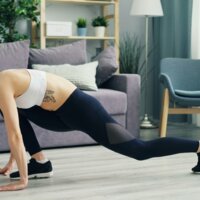
Top 7 Pelvic Floor Exercises for Women and Men

Want better sexual control, less pain or discomfort, and improved overall well-being? Start with your pelvic floor muscles. These deep, foundational muscles are key to our stability, sexual health, and pleasure, regardless of gender or age.
In this article, we've gathered the most effective exercises that help:
- enhance orgasmic sensitivity;
- improve erection strength and delay ejaculation;
- prevent or reduce symptoms of incontinence;
- Teach you how to relax and reconnect with your body in a deeply profound way.
1. Kegel Exercises

Suitable for everyone
This basic but powerful exercise can be done anywhere.
How to do it: Imagine stopping your urine midstream — tighten those muscles for 3–5 seconds, then release. Repeat 10–15 times, 2–3 sets daily.
Benefits:
- Women: increased sensitivity, pelvic organ support.
- Men: improved erection control, delayed ejaculation.
2. Bridge Pose

Activates pelvic floor + glutes
How to do it: Lie on your back, knees bent, feet flat. Lift your hips, engaging glutes and pelvic floor muscles. Hold for 10 seconds. Repeat 10–15 times.
3. Squats

Strength, stability, and control
Squats work deep core muscles, including the pelvic floor.
How to do it: Stand with feet shoulder-width apart, squat until thighs are parallel to the floor. On the way up, engage your pelvic floor muscles.
4. Bird-Dog Exercise

Improves coordination and muscle control
Start on all fours. Extend your right arm and left leg, engaging your abs and pelvic floor. Hold for 5 seconds. Return and switch sides. Do 10 reps per side.
5. Pelvic Tilts

Feel your foundation
Lie on your back with your knees bent. Press your lower back into the floor, hold for 5 seconds, then relax. Do 10–15 reps.
6. Diaphragmatic Breathing

The key to soft strength
Breathe deeply through the nose, expanding the belly. On each exhale, gently draw in the pelvic floor muscles. This promotes relaxation and deep muscle tone.
7. Relaxation Poses (Child’s Pose, Happy Baby)

For tension or pain relief
Not just tension, relaxation is essential. Yoga-inspired poses help release tight pelvic floor muscles, especially in cases of pain, hypertonicity, or stress.
How Often Should You Train?
|
Tip |
Recommendation |
| Frequency |
3–5 times per week |
| Reps |
10–15 reps per set |
| A duration |
10–15 minutes per day is enough |
| Key Rule |
Combine engagement with complete relaxation |
| See a specialist if |
You experience pain, incontinence, or postpartum/post-surgery issues — get a tailored plan from a pelvic floor physiotherapist |
Your pelvic floor muscles may be invisible, but their impact is enormous. From sexual satisfaction and confidence to physical stability, they play a vital role in your quality of life. And the best part? You can train them.
Start simple. Stay consistent. Your body will thank you.