Програма ChatGPT сказала: Yoga for Beginners: Basic Asanas and Tips for a Proper Start

Yoga has long been one of the most popular fitness disciplines in the world. It combines gentle physical activity, breathwork, and psychological relaxation. For beginners, yoga is a way to improve flexibility, strengthen muscles, reduce stress levels, and learn to listen to your own body. In this article, we have gathered basic yoga asanas, key trainer tips, as well as common mistakes to avoid so that your first practice is safe and effective.
Benefits of Yoga for Beginners
Regular yoga practice has a comprehensive effect on the body:
- improves flexibility and joint mobility
- strengthens the muscles of the back, core, and legs
- normalizes breathing and improves concentration
- reduces stress and anxiety levels
- develops proper posture and balance
That is why yoga is suitable for people of any age and fitness level.
Basic Yoga Asanas for Beginners
Below are basic poses that trainers recommend starting with. They help you learn breathing techniques, activate the main muscle groups, and prepare the body for more advanced exercises.
1. Tadasana (Mountain Pose)

Purpose: developing proper posture, stabilizing the core, strengthening the legs.
Execution technique:
- Stand upright with your feet together or hip-width apart.
- Lengthen the spine, roll the shoulders down and back.
- Engage the abdominal and thigh muscles.
- Breathe evenly and calmly.
Mistake: shifting body weight onto the heels, slouching.
2. Adho Mukha Svanasana (Downward-Facing Dog Pose)
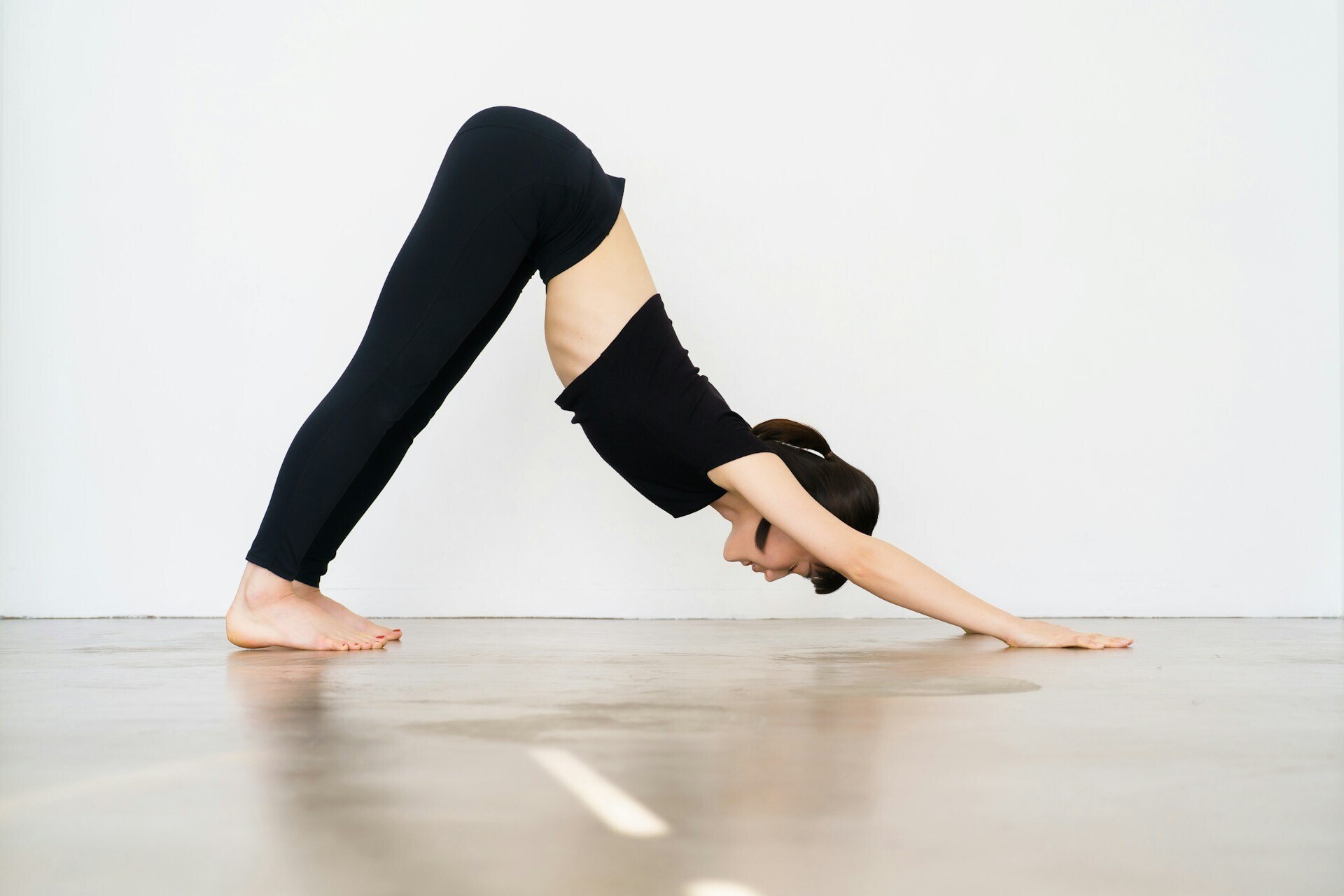
Purpose: stretching the back of the legs, strengthening the arms and back.
Technique:
- From a hands-and-knees position, lift the hips upward.
- Extend the arms, pressing the floor away.
- Heels reach toward the floor but do not have to touch it.
- The neck is relaxed.
Mistake: rounding the back or overloading the shoulders.
3. Balasana (Child’s Pose)
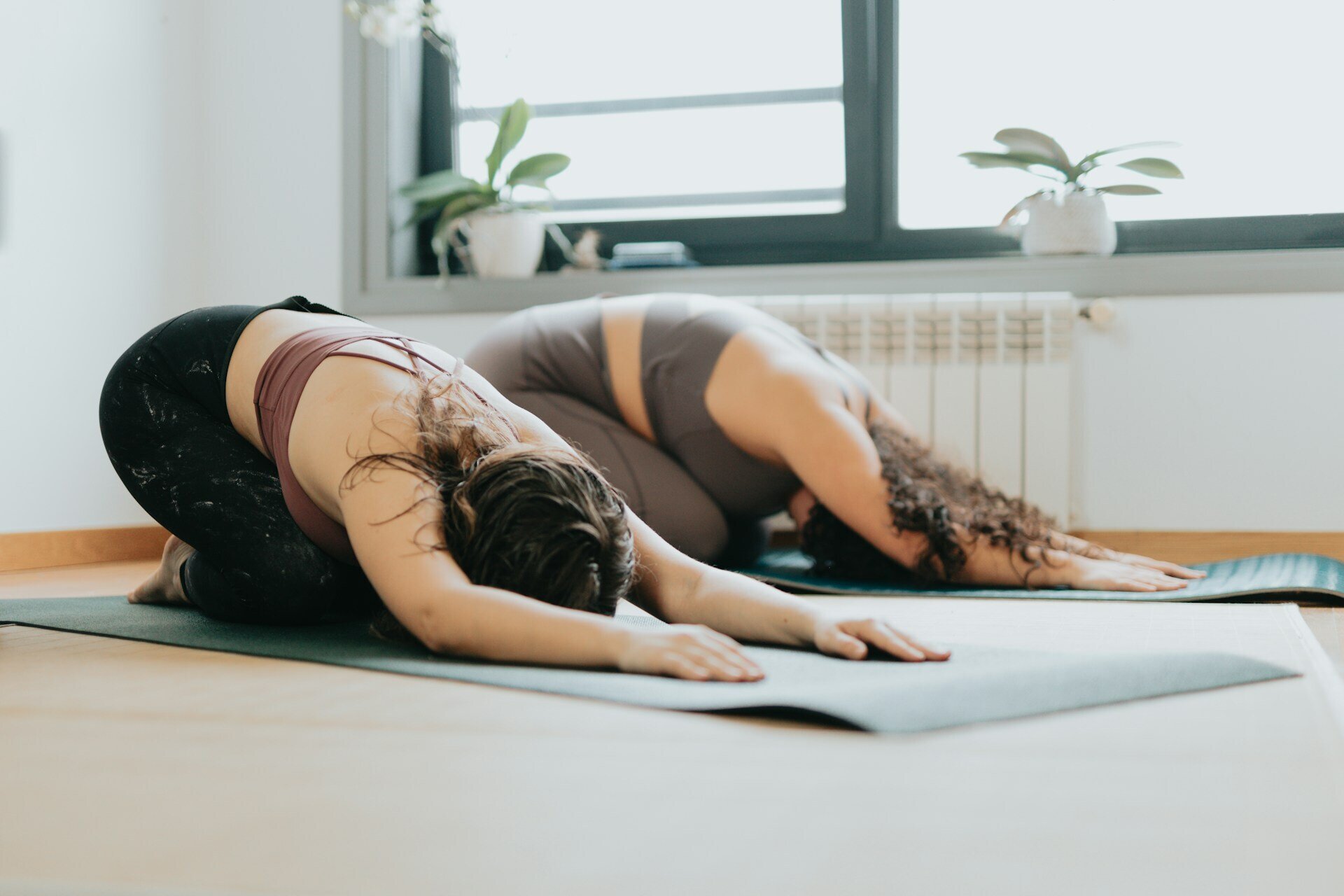
Purpose: gentle relaxation of the lower back, calming the nervous system.
Technique:
- Sit back on your heels and fold forward, extending the arms.
- Place your forehead on the mat.
- Breathe slowly, allowing the body to relax.
Mistake: tension in the shoulders or knees positioned too narrowly.
4. Virabhadrasana I (Warrior I Pose)

Purpose: strengthening the legs, core, and back muscles; improving balance.
Technique:
- Take a wide step back.
- The front knee is bent at a 90° angle, the back leg is straight.
- Raise your arms upward, opening the chest forward.
Mistake: excessive arching in the lower back or uneven hip alignment.
5. Vrikshasana (Tree Pose)

Purpose: developing balance and concentration.
Technique:
- Stand on one leg, placing the other foot on the inner thigh.
- Bring the palms together in front of the chest or raise them overhead.
- Fix your gaze on one point.
Mistake: placing the foot on the knee joint (risk of injury).
6. Setu Bandhasana (Bridge Pose)
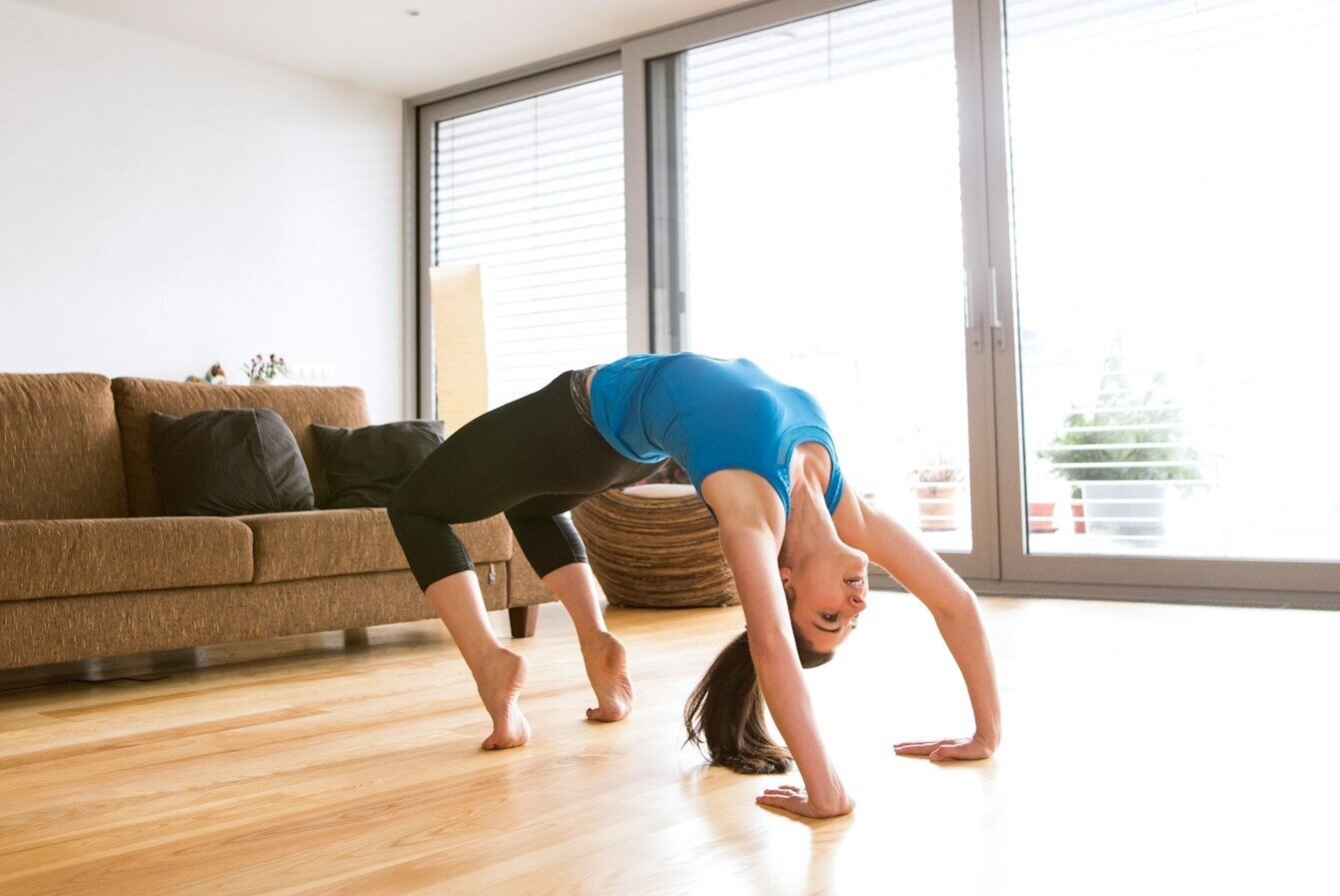
Purpose: strengthening the glutes, hamstrings, and lower back.
Technique:
- Lie on your back with your feet hip-width apart.
- Lift the hips, engaging the core and glutes.
- Press your hands into the floor.
Mistake: excessive arching in the lower back.
Helpful Tips for Those Starting Yoga
1. Start with simple classes
It is better to choose a Beginner or Basic Yoga Flow level. Complex asanas without preparation can create unnecessary strain.
2. Perform asanas slowly and mindfully
Yoga is not about speed. Focus on your breathing and bodily sensations.
3. Use supportive props
Blocks, straps, or bolsters help simplify technique and make practice safer.
4. Do not compare yourself to others
Flexibility is not a measure of success. Every body is unique.
5. End your practice with Savasana
The pose of deep relaxation helps integrate the effects of the workout.
Common Beginner Mistakes
- excessive tension in the shoulders and neck
- incorrect breathing (holding or rushing the breath)
- trying to “push through” at the cost of pain
- insufficient warm-up before challenging asanas
- lack of core stability
By avoiding these mistakes, you will reduce the risk of injury and progress more quickly in your practice.
Conclusion
Yoga for beginners is a wonderful way to strengthen the body, balance the emotional state, and improve overall well-being. The key is to start gradually, master basic asanas, and listen to your body. After just a few weeks of regular practice, you will feel greater muscle stability, ease of movement, and more inner calm.